


In brief
LED video walls mainly use two package types: DIP LEDs (dual in-line package) with through-hole soldered leads, and SMD LEDs (surface-mounted device) soldered directly onto the board. DIP suits long viewing distances from about P10; SMD allows considerably finer pixel pitches, wider viewing angles and more stable light output over time.
DIP LEDs
In the beginning there was the DIP (dual in-line package)
You have certainly come across these LEDs in many devices: they consist of a mostly transparent plastic dome into which the light source is encapsulated together with two protruding, solderable wire leads. Power is supplied via these wires, and DIP LEDs are available in a wide range of brightness levels and colours. For use in video walls, red, green, and blue LEDs are traditionally used, soldered onto circuit boards in groups of three.
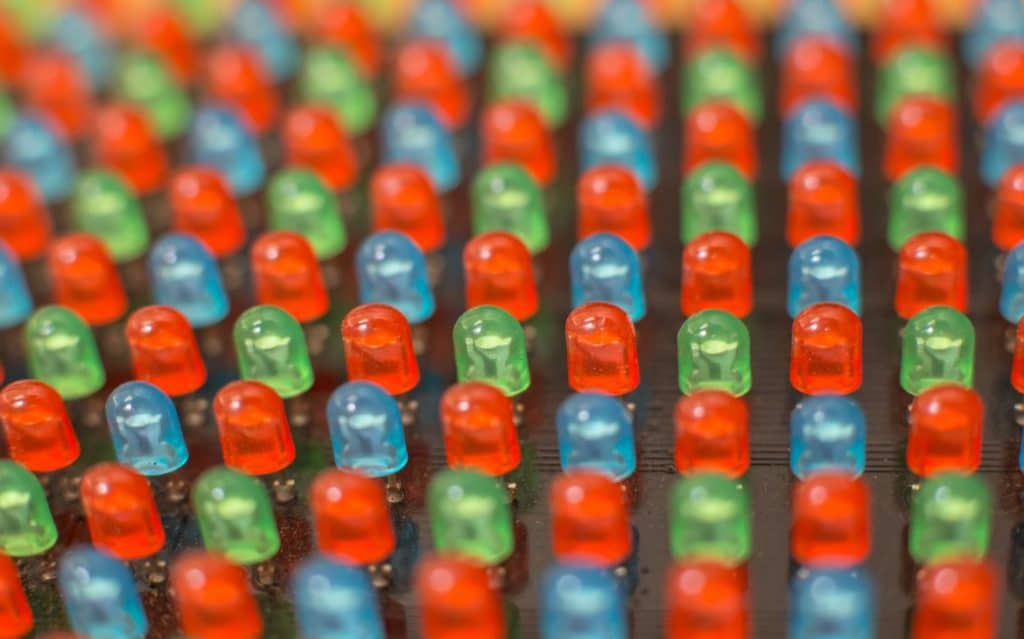
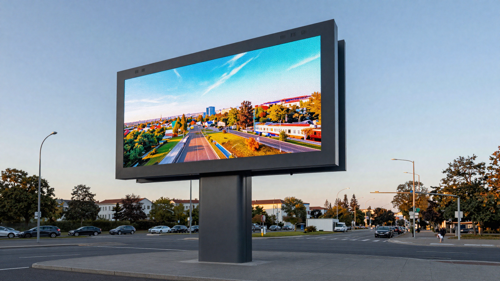
Advantages: High overall light output and, with well-matched colour values, a broadly reproducible colour spectrum in the conventional RGB range. Contrast is also very high, since LEDs that are not needed simply remain dark. These LEDs are used in video walls for outdoor and indoor applications with large viewing distances. Thanks to through-hole soldering to the board, the connection to the main PCB is very robust, reliable, and road-proof.
Disadvantages: The light output of the LEDs noticeably degrades rather quickly. Furthermore, with a pixel pitch of at least P10 per group of three DIP LEDs, they are only suitable for larger viewing distances. The beam angle is usually also considerably narrower than with SMD LEDs.
SMD LEDs
SMD LED (surface-mounted device)
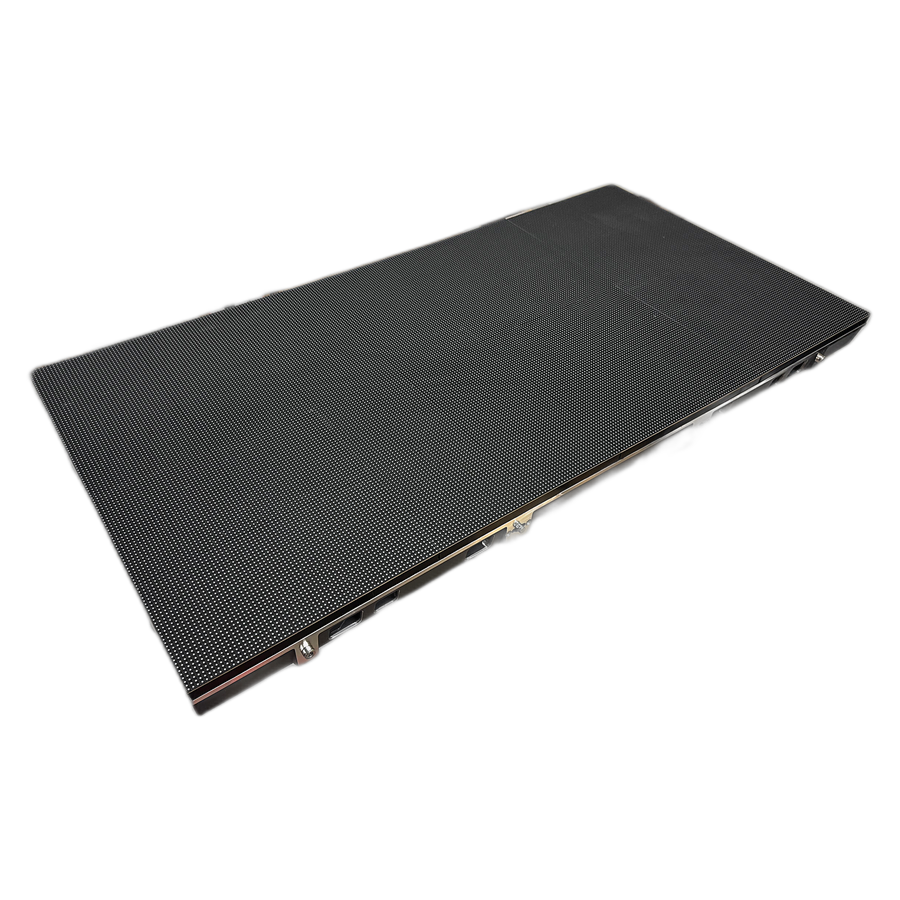
SMD LEDs can be found almost everywhere in modern lighting technology today. You know SMDs from the popular LED strips, where they are soldered onto flexible, elongated circuit boards. They are available in single-colour and multi-colour versions and now also as intelligent SMD chips, which can be individually controlled in series via logical chain addressing. Video walls use RGB SMDs, which allow a much better resolution than DIP LEDs thanks to direct colour mixing on the individual SMDs.
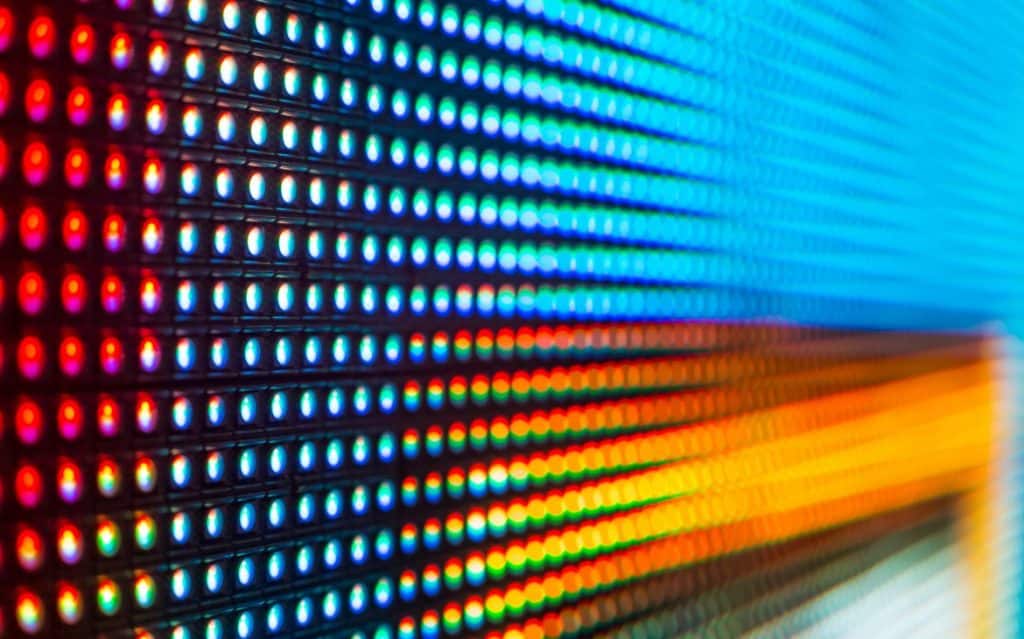
Advantages: A much smaller pixel pitch is possible than with DIP LEDs, with equally efficient RGB colour mixing and equally high contrast. Wide viewing angle and good long-term light output.
Disadvantages: Because they are surface-soldered onto the main board, SMD LEDs are somewhat more prone to cold solder joints than DIP LEDs.
Frequently asked questions – LED Types
What is the difference between DIP and SMD LEDs?
DIP LEDs consist of a mostly transparent plastic dome with two protruding solderable leads and are soldered onto the board in red-green-blue triplets. SMD LEDs are surface-mounted components soldered directly onto the board and mix colours within the single component, which permits considerably finer pixel pitches.
What are the advantages of DIP LEDs?
DIP LEDs offer high overall light output and, with well-matched colour values, a broad RGB colour range. Contrast is high because unused LEDs simply do not light. Through-hole soldering creates a very robust, road-worthy connection to the main board.
What are the disadvantages of DIP LEDs?
The light output of DIP LEDs declines noticeably faster. With a minimum of P10 per triplet, the pixel pitch is only suitable for longer viewing distances, and the emission characteristic is usually considerably narrower than with SMD LEDs.
Why do modern LED walls use SMD?
SMD LEDs allow a much smaller pixel pitch with equally efficient RGB colour mixing and equally high contrast, plus a wide viewing angle and good sustained light output. The design-related drawback: surface soldering makes cold solder joints somewhat more likely than with DIP.
Consulting and planning by WALED
WALED VIDEOWALLS GmbH, based in Duisburg, develops, supplies and installs LED video walls for fixed installation and rental – indoor and outdoor, throughout Germany. As a manufacturer for fixed installation and rental with 25 years of experience we plan your system from requirements analysis and 3D planning through to commissioning and maintenance. Reach us on +49 (0) 172 2844494 or via the contact form. Find the right configuration in minutes with the LED wall configurator.